Is the ‘Ban Pharmaceutical Advertising’ Crowd on Drugs or Something?

Well the Doc opened up the old mailbag today and here’s what poured out.

Dear Dr. Ads,

There I was, minding my own business and starting to paw through the New York Times, when I saw Rebecca Robbins’ front-page story about incoming Trump administration officials looking to euthanize pharmaceutical ads on TV.

Since the late 1990s, drug companies have spent tens of billions of dollars on television ads, drumming up demand for their products with cheerful jingles and scenes of dancing patients.

Now, some people up for top jobs in the incoming Trump administration are attacking such ads, setting up a clash with a powerful industry that has long had the courts on its side.

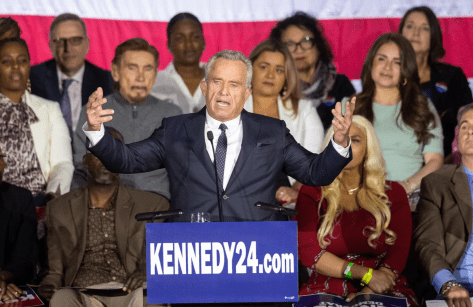
Robert F. Kennedy Jr., President-elect Donald J. Trump’s choice for health secretary, is a longtime critic of pharmaceutical advertising on TV, arguing that it leads broadcasters to more favorable coverage of the industry and does not improve Americans’ health. He has repeatedly and enthusiastically called for a ban on such ads.

What’s your professional opinion, Doc? Could Bobby Brainworm succeed where so many others have failed?

– On My Meds

Dear OMM,

Let’s start with a short history lesson, shall we?

Back in the ’90s, when the Food and Drug Administration first allowed pharmaceutical advertising to run on television, the ads could say the name of the drug but not what it did, or say what it did but not its name.

It was very Old Testament.

In 1997, though, the FDA bowed to the First Amendment and loosened it restrictions, “[allowing] drug manufacturers to describe the benefits of the drugs without providing long, detailed notices of the side effects. Instead, the F.D.A. said, the drug companies would be required to include in the advertisements a ‘brief summary’ of the major risks,” according to a Times piece that year.

Prescription drug commercials quickly developed a format to meet that requirement: The first half of the spot featured happy people living happy lives thanks to the wondrous effects of the drug; the second half featured a monotone voiceover intoning Contradictions & Side Effects (“Do not take Superion if you are allergic to it; side effects include headache, sudden death, something something something”) while images of windsurfers or giraffes or marching bands cranked up the Big  Pharma Distraction Machine.

(Nowadays, the Doc’s exposure to pharmaceutical commercials is largely limited to the ones that run on The Tennis Channel, most of whose viewers seem to be a) plagued by skin rashes, b) chronically short of breath, or c) allergic to whatever food their companion is enjoying.)

Those freewheeling days, however, appeared to be over when the FDA issued new rules for disclosure in the roughly $5 billion Big Pharma is slated to spend on national television advertising this year.

The Food and Drug Administration (FDA, the Agency, or we) is issuing a final rule to amend its regulations concerning direct-to-consumer (DTC) advertisements (ads) for human prescription drugs presented in television or radio format and stating the name of the drug and its conditions of use (DTC TV/radio ads). Specifically, the final rule implements a requirement of the Federal Food, Drug, and Cosmetic Act (FD&C Act), added by the Food and Drug Administration Amendments Act of 2007 (FDAAA), that in such DTC TV/radio ads, the major statement relating to side effects and contraindications must be presented in a clear, conspicuous, and neutral manner.

Drive PhRMA nuts graf: “In ads in TV format, the information presented in the audio portion of the major statement must also be presented concurrently in text for a sufficient duration to allow it to be read easily. In ads in TV format, the information in text must be formatted such that the information can be read easily. The ad must not include audio or visual elements during the presentation of the major statement that are likely to interfere with comprehension of the major statement.”

Loose translation: No more giraffes!

Except . . .

In our admittedly unscientific survey, there ‘s been only one minor change in prescription drugs ads since the FDA’s drop-dead date of November 20: the addition of small type at the bottom of the screen during disclosure. Other than that, the distraction machine grinds on.

The Doc’s diagnosis: If the federal government can’t even effectively regulate pharmaceutical advertising on television, it sure as hell doesn’t seem capable of banning it outright.

Someone send RFK Jr. some migraine medication, wouldya?
Why Does a Snoopy Watch Get a Full-Page Teaser Ad in the New York Times?

Well the Doc opened up the old mailbag today and here’s what poured out.
Dear Dr. Ads,

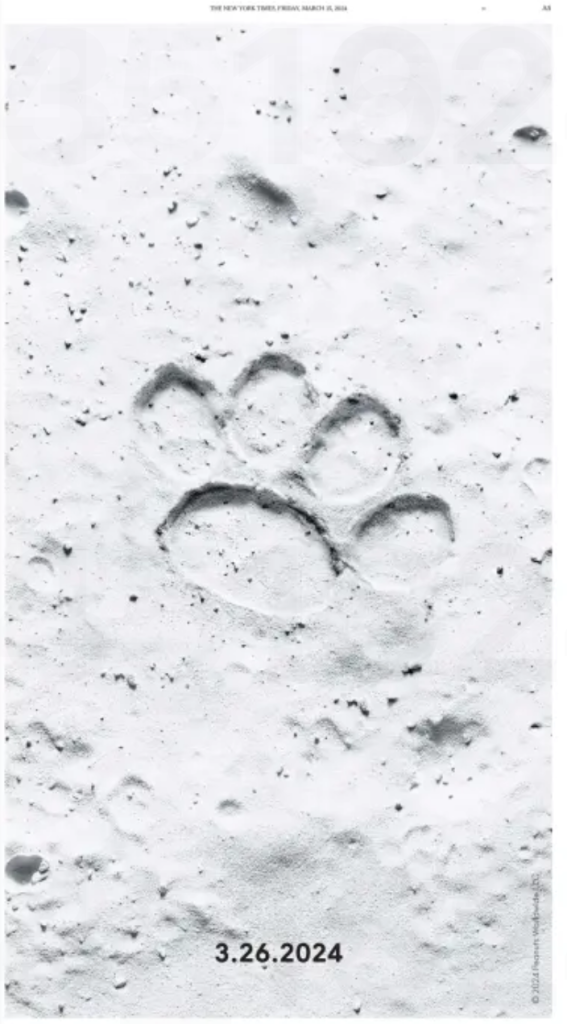
There I was, minding my own business and leafing through the New York Times, when I came across this full-page ad on A5.

What’s going on here, Doc? Is there a moon landing scheduled for later this month? Is Elon Musk planning to SpaceX his Shiba Inu Floki up there? What am I missing?

– Moon Stuck

Dear MS,

What you missed was the small © 2024 Peanuts Worldwide LLC in the lower right-hand corner of the ad. Plug that into the Googletron and you get this piece from MGB Watches, which notes that the ad also ran in The Guardian newspaper.

SNOOPY MOONSWATCH RELEASE DATE CONFIRMED – 26.03.24

The much awaited buzz surrounding the Snoopy MoonSwatch has reached its peak, as another official teaser graces The Guardian newspaper today. Capturing attention with an intriguing image of a paw print imprinted on the Moon’s surface, it unmistakably announces the release date of a Snoopy MoonSwatch: 26.03.24! . . .

26th March is such a significant date for the MoonSwatch as it marks the two year anniversary: On March 26th, 2022, Swatch unveiled the incredibly successful collection, consisting of the much loved 11x planet themed Omega x Swatch Speedmaster Watches.

For those of you keeping score at home, not everyone loved the Omega x Swatch collection, as this letter to the Doc two years ago detailed.

Dear Dr. Ads,

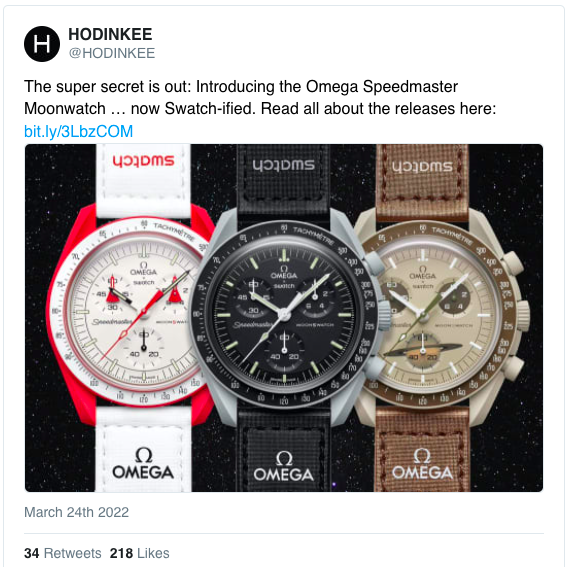
There I was, minding my own business and reading Jonathan V. Last’s Triad newsletter at The Bulwark, when I came across this item.

3. Watch Talk

It’s been a while since and I know that this if [sic] frivolous, but this just happened:

I have no words.

Taking the iconic Speedmaster Professional—the watch that went to the frickin’ moon—and turning it into a candy-colored hunk of plastic quartz . . . this is an abomination. An offense against God and nature. It’s like the Louvre partnering with Oscar Mayer to sell a Bologna Lisa.

So here’s my question, Doc: Do you want to see the Bologna Lisa as badly as I do?

– Swatched at Birth

Fun fact to know and tell, via Bianca Bosker’s “Lost Basquiats” piece in The Atlantic: “Researchers at the City University of New York instructed study participants to imagine that the Mona Lisa had been destroyed in a fire and asked them whether they’d rather see its ashes or a copy that not even connoisseurs could distinguish from the original. Eighty percent picked the ashes.”

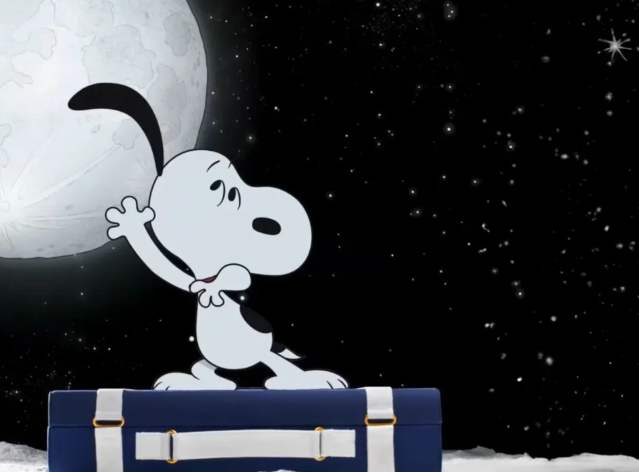
But back to MoonSwatches. Those Snoopy newspaper ads weren’t even the first teasers for the new timepiece, as Wired’s Jeremy White reported several months ago.

Considering the long-established connection between Snoopy and Omega, after the original MoonSwatch caused pandemonium around the globe in 2022 and reinvigorated Swatch’s previously flagging fortunes, it’s hardly surprising that the brand should mine this rich Schulz seam to tease a coming Snoopy MoonSwatch.

There’s only one thing that could stop this cartoon-collaboration MoonSwatch from being the most popular version of the series since the Omega X Swatch’s frenzied launch: if it’s as unimaginative and understated as the Moonshine Gold editions that followed the bright and bold original MoonSwatches.

The Doc’s diagnosis: There’s no guarantee watch nerds will be over the moon for the new Snoopy-on-a-strap when it finally lands, either.

Who’s Coughing Up the Cash for Full-Page Ads Touting Robert F. Kennedy, Jr.?

Well the Doc opened up the old mailbag today and here’s what poured out.
Dear Dr. Ads,

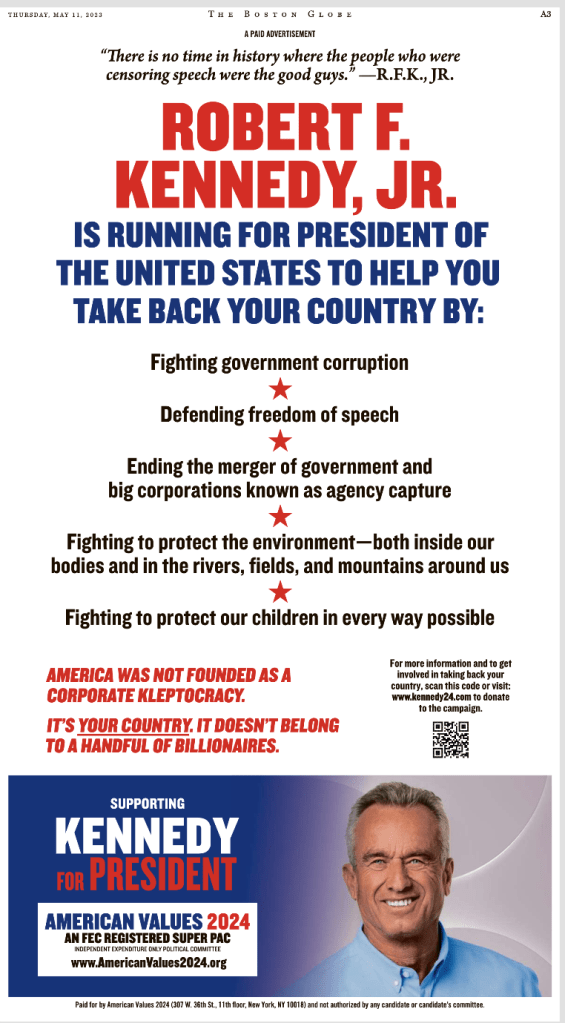
There I was, minding my own business and flipping through the Boston Globe, when I came across this full-page ad on A3.

What the hell, Doc – this guy’s calling card is his anti-vaccine jihad, but no mention of it in this costly  five-figure advertisement? Is the Super PAC just trying to inoculate him?

– Vax Vexed

Dear VV:

First of all, you gotta admire any full-page ad in a major metropolitan newspaper that starts off with a quote about being silenced.

Beyond that, now that we know who the bad guys are, let’s take a look at the purported good guys, starting with the outfit that paid for the ad, American Values 2024. Its website fails to list any of the Super PAC’s good guy funders, but it does showcase Our Team.

The website also spotlights the bad guys at ABC News.

ABC News makes a point of letting viewers know they censored RFKJ

ABC News made a bizarre announcement that they censored RFKJ’s statements about COVID, vaccines and autism following an interview with him on Thursday, 4/27 that included a discussion of the ongoing censorship of him by the corporate media.

“We should note that during our conversation, Kennedy made false claims about the COVID-19 vaccines,” ABC interviewer Linsey Davis said following the interview. “We’ve used our editorial judgment in not including extended portions of that exchange in our interview.” Davis added.

At this point we will just quote Kennedy, “Show me where I am wrong.”

The group helpfully provides video of the offending segment.

Finally, there’s this boilerplate about the Super PAC.

(John Gilmore’s website provides exactly zero additional information.)

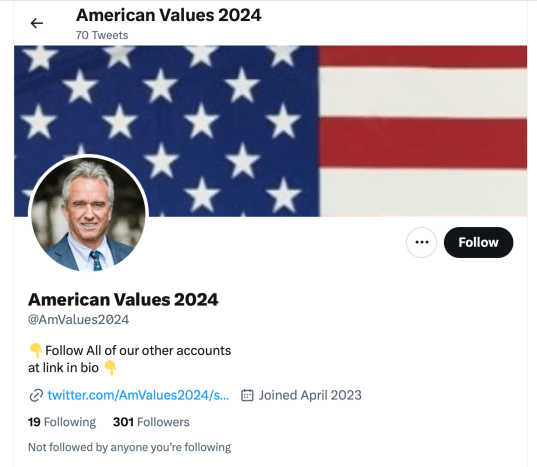
The American Values 2024 Twitter feed  (70 tweets, 301 followers) isn’t much help either.

But elsewhere on Twitter, the Super PAC has gotten a modicum of attention.

About a week ago, Slate’s Jim Newell took a look at those polling numbers.

Kennedy officially launched his Democratic primary bid on April 19, after a month or two of making noise about it. In an April 9 Morning Consult poll, 10 percent of those surveyed said they would support Kennedy for the Democratic presidential nomination. The day of Kennedy’s launch, a USA Today/Suffolk poll had Kennedy at 14 percent. The Fox News poll released April 26, referenced by CNN, showed Kennedy at 19 percent. Kennedy was at 21 percent in an April 27 Emerson College poll . . .

It’s not just Kennedy who has a little bit of traction, though. Marianne Williamson, in her second consecutive Democratic primary, is registering in polls as well. In the Fox News survey, Williamson was polling at 9 percent. She was at 8 percent in the Emerson poll.

The main reason these two eccentrics have a surprising primary polling foothold against an incumbent president, then, is because they are the only two warm bodies giving it a go against a president who a supermajority of Americans believe should not run for president again.

One final note: The Bulwark’s Jonathan V. Last asks, Why Is This Man Running as a Democrat?

If you haven’t read Mona [Charen’s] fantastic piece about RFK Jr., go do that right now.

For me, the most interesting question is: Why is this guy running as a Democrat?

As Mona demonstrates, RFK Jr.’s biggest fans seem to come from conservative world. He’s a Fox News / InfoWars kind of candidate . . .

And RFK Jr. is much closer to Alex Jones and Trump and even DeSantis than he is to Bernie Sanders or any other Democratic figure . . .

[It] seems possible that if DeSantis hollows out, the opening isn’t for Nikki Haley, or Tim Scott, or Brian Kemp—it’s for someone like RFK Jr., or Elon Musk, or Alex Jones to take from Trump by making him look like part of the establishment.

The Doc’s diagnosis? Forget Covid boosters – get yourself a Dramamine drip and settle in for the long run.

P.S. Still no idea who’s bankrolling American Values 2024, but it’s bound to come out sooner rather than later.

How Many Lost Advertisers Does It Take To Screw Twitter?

Well the Doc opened up the old mailbag today and here’s what poured out.

Dear Dr. Ads,

There I was, minding my own business and reading Joe Mandese’s MediaPost column, when I came  across this item about Twitter, consumer brands, and public opinion.

While its new owner Elon Musk has blamed pressure groups — as well as advertisers themselves — for discontinuing advertising on Twitter, half of American consumers believe it was the right thing to do since he acquired the company and began making it an even more toxic place for brand marketers and consumers alike.

According to a survey of 500 U.S. adults fielded by Pollfish  on Tuesday, 49% agree with the decisions of big brands to halt their Twitter ad spending, while 27% said they do not agree with their decision and 24% said they’re not sure.

Seeing as how Twitter has normally gotten about 90% of its revenue from ad sales, that’s gotta leave a mark, eh Doc?

– Tweet Dreams

Dear TD,

Yeah, that survey just adds insult to (financial) injury.

Start with Musk’s whining about activist groups pressuring advertisers to ghost Twitter. As CNBC’s Lora Kolodny and Jonathan Vanian have reported, Musk claims that a coalition of activist groups “broke an agreement with him by encouraging companies to halt advertising on Twitter.”

Here’s the dispute in a nutshell, compliments of Patrick W. Watson.

As the CNBC piece noted, those activist groups actively disagree.

Derrick Johnson, CEO of the National Association for the Advancement of Colored People, said in response to Musk’s claims on Tuesday that the civil rights groups “would never make such a deal” and that “Democracy always comes first.”

“The decisions being made at Twitter are dangerous, and it is our duty, as it has been since our founding, to speak out against threats to our democracy,” Johnson said. “Hate speech and violent conspiracies can have no safe harbor.”

Gay & Lesbian Alliance Against Defamation, Free Press, and the Simon Wiesenthal Center all say ditto.

So there’s that.

And then there’s this, according to NPR’s Halisia Hubbard.

Twitter has lost 50 of its top 100 advertisers since Elon Musk took over, report says

Half of Twitter’s top 100 advertisers appear to no longer be advertising on the website. A report from Media Matters for America states that these 50 advertisers have spent almost $2 billion on Twitter ads since 2020 and more than $750 million just in 2022.

Seven additional advertisers have slowed their advertising to almost nothing, according to the report, which was published on Tuesday. These companies have paid Twitter more than $255 million since 2020.

And perhaps the unkindest cut of all for our very own Muskie Muskrat is this Joe Mandese post at Red, White, and Blog.

Vox Populi, Vox Dei: Musk Won’t Own Twitter Much Longer

If the voice of the people really is the voice of God — as Elon Musk keeps tweeting — then he won’t own Twitter much longer.

According to a survey conducted by Pollfish for MediaPost on Tuesday, most American adults do not believe Musk will even own Twitter more than a year.

While a third believe he will own the social media platform a year or more, most consumers believe it will only be “a few months” or “until something else catches his fancy.”

So, will Musk and Twitter crash and burn?

Maybe even prob-a-bool.

Is Elon Musk a Twit Who’ll Drive Tesla’s Stock Into a Ditch?

Well the Doc opened up the old mailbag today and here’s what poured out.
Dear Dr. Ads,

There I was, minding my own business and tooling around the interwebs, when I came across this Reuters piece by Lauren Silva Laughlin and Gina Chon.

Elon Musk probably won’t buy Twitter

NEW YORK, April 27 (Reuters Breakingviews) – Four years ago, Elon Musk vowed to set up a peanut brittle company to take on Warren Buffett’s iconic U.S. confectioner See’s Candies. Then he changed his mind. It wouldn’t be surprising if Musk’s $44 billion deal to buy social network Twitter went the same way.

Sure, the Tesla boss was clearly serious about acquiring Twitter as of recently. The financing from Morgan Stanley is shored up. The agreement includes a fee of $1 billion that he – or Twitter – would have to pay if they renege on the contract. And Twitter’s lawyers even wedged in a so-called “specific performance” clause, which could theoretically force Musk to buy the company if he threatens to back out, though in practice this could probably be settled by adding to the break fee.

There are good reasons for him to get cold feet . . .

What do you think, Doc – could Elon have actually musked this up?

– ElonGate

Dear ElonGate,

Let’s check in with Felix Salmon at Axios Capital, who ties Musk’s Twitter bid to his Tesla stock.

Tesla’s stock could fall much further

The recent decline in Tesla stock, possibly caused by worries about Musk’s successful bid for Twitter, has raised concerns that he barely has the liquidity to raise the $21 billion he needs to provide in cash to pay for his new platform.

By the numbers: If you exclude stock that Musk has pledged to secure loans, the value of his freely-sellable Tesla shares is only about $11 billion. In order to find the extra $10 billion, he might have to exercise some of his stock options. That’s expensive, since he’d need to pay income tax, rather than lower long-term capital gains tax, on such sales.

  • What goes down can go down much further: Tesla stock is about 33% below its all-time high. Yet Facebook has performed much worse than that, while rival electric carmaker Rivian is down more than 80%.

A continued decline in Tesla shares could cause margin calls and a lot of forced selling by Musk, which in turn would tend to drive the stock lower still.

The Doc’s diagnosis: Elon definitely might musk everything up.

Your tweet goes here.