Is Donald Trump Really Marketing Tiny Pieces of His Mugshot Suit?

Well the Doc opened up the old mailbag today and here’s what poured out.

Dear Dr. Ads,

There I was, minding my own business and listening to The Bulwark’s Sarah Longwell and Jonathan V. Last on The Secret Podcast, when JVL started talking about Donald Trump’s latest NFT (non-fungible token) grift.

Donald Trump this week announced a new wave of his NFTs, and these are the Mugshot series.

Hmm where all of the pictures have are, you know riffing off of his mugshot glare Yeah, and if you buy a hundred of them, which I believe is $10,000 worth so if you if you buy $10,000 worth of these you will also get a Physical trading card like a like a baseball card here.

Seriously, Doc – ten grand for a Trump trading card? Please tell me that is . . . 

– Not Freaking True

Dear NFT,

Truer than anything Donald Trump ever says, I’m sorry to report.

Start with Trump’s mug shot, taken last summer in a Georgia courthouse.
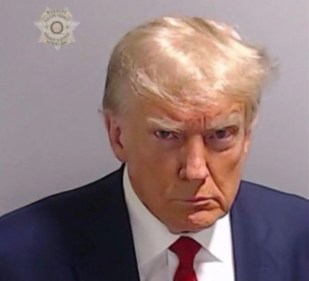
That was just raw material, though, as Vanessa Friedman wrote in the New York Times.

[T]his week, NFT INT, the official licensee of the Trump name and image for digital trading cards, began selling a special “Mugshot Edition” NFT set that includes, for a certain few willing to buy the whole thing, pieces of the blue suit and red tie Mr. Trump wore in the photo.

Or, as the NFT INT website calls the garment, “The most historically significant artifact in American history.”

The goods, for those of you keeping score at home.

That would be what’s known in the business as a “relic card” – like a piece of the True Cross relic, which plays nicely into the whole Orange Jesus thing. The Times piece notes that there are “enough tiny suit pieces for 2,024 buyers.” Some coincidence, eh?

The Doc’s diagnosis: This is just the latest indication that everything in Donald Trump’s life is transactional, right down to the clothes off his back.

Don’t even wanna know what might be next.
Can a GOP Congressman Really Use Taxpayer $$$ to Ad-tack Joe Biden?

Well the Doc opened up the old mailbag today and here’s what poured out.

Dear Dr. Ads, 

There I was, minding my own business and scrolling through Punchbowl News AM, when I came across this item from reporter Max Cohen about a new TV spot attacking Joe Biden and his family.

Rep. Pat Fallon (R-Texas) is running a campaign ad touting his impeachment work through his spot on the House Oversight Committee.

Fallon says in the ad that the panel is “leading the charge to investigate Hunter Biden, the Biden family and the alleged payments they received from foreign countries.” It’s an interesting example of how lawmakers are messaging on the impeachment inquiry into President Joe Biden back home. Even more interesting — this ad was paid for with taxpayer money, not campaign dollars.

What the hell, Doc – I have to pony up for this guy’s political benefit? No way I ever signed up for that.

– Fallon Angles

Dear FA,

Seems crazy, right? Your tax dollars at work promoting Rep. Pat Fallon (R-Taxes) and the GOP’s evidence-free impeachment inquiry, an endeavor so ham-handed it belongs in a Hormel processing plant.

Here’s what you bought and paid for.

Two things of note in this TV spot spewing unfounded allegations against Joe Biden and his family: 1) Fallon is “sick and tired of politicians thinking that they’re above the law,” and 2) The ad is “Paid for by Official Funds Authorized by the House of Representatives.”

Then again, maybe not so authorized.

Guidelines from the U.S. House of Representatives’ Committee on Ethics include a General Prohibition Against Using Official Resources for Campaign or Political Purposes: “Official resources of the House must, as a general rule, be used for the performance of official business of the House, and hence those resources may not be used for campaign or political purposes.”

Campaign or political  purposes are absolutely the objective of Fallon’s TV spot, given that he’s running for reelection to the House after launching a bid for Texas Senate that lasted all of 24 hours and two Come-to-Jesus conversations, as the Texas Tribute noted.

The Doc’s diagnosis: Pat Fallon is hardly a guy you’d look to for clear-eyed, resolute guidance on ethical issues. He should at least have the decency not to use taxpayer funds to demonstrate that.

Why Is Nikki Haley Barely Nicking Donald Trump in Her First Iowa TV Spot?

Well the Doc opened up the old mailbag today and here’s what poured out.
Dear Dr. Ads,

There I was, minding my own business and paging through the Weekend Wall Street Journal, when I came across this interview with Nikki Haley based on a sit-down the former South Carolina governor and U.N. Ambassador in the Trump administration had with the Journal’s editorial board.

Drove-me-nuts graf:

She is careful to give her former boss his due: “I think President Trump was the right president at the right time,” she says. “I really do.” But “chaos follows him wherever he goes. And every one of you knows I’m right.” She scans the room. “When the world is on fire and our country is completely distracted, we can’t continue down this chaotic path.”

Really? That’s her brief for replacing the guy who’s ahead of her by 50 points in polls and 91 felony counts in courts of law? He’s a chaos magnet? What the hell, Doc.

– Nik-Pikki

Dear NP,

Yeah, you’re not the only one eye-rolling about Haley’s rolling over for Trump. Here’s what The Bulwark’s Will Saletan wrote on Substack the other day.

Have you heard Nikki Haley’s pathetically weak description of Trump’s behavior? She says “rightly or wrongly, chaos follows him.” In today’s @The Bulwark podcast, @Charlie Sykes mocks her evasive language. “It’s a little bit like saying, ‘You know, wherever Jeffrey Dahmer goes, people are found dead.'” lnk.thebulwark.com/47Mq34r

Haley is just as mealy-mouthed in her first Iowa TV spot.

“A president must have moral clarity,” she says, “and know the difference between good and evil. Today, China, Russia, and Iran are advancing . . .”

And etc.

Oh, wait – Haley also says, “it’s time for a new generation of conservative leadership. We have to leave behind the chaos and drama of the past, and strengthen our country, our pride, and our purpose.”

The Doc believes that pitch was far more forceful in the original Esperanto.

To call Haley’s alleged presidential primary campaign against Donald Trump a pillow-fight is an insult to pajama parties worldwide.

And yet . . .

Another Bulwark stalwart, Jonathan V. Last, presented two theories of the case in his Triad newsletter: “Theory #1: You attack Trump in order to take his voters from him . . . Theory #2: If you attack Trump then you can’t get a hearing from Republican voters.”

The first gambit represents a gargantuan task, likely requiring Haley to go after Trump hammer and tongue. Last says that might be possible, but makes this “utilitarian case” for the second approach.

The only way to have a chance to beat Trump is to pretend that he’s fine and to pledge to support him at some point down the road. The act of telling the truth about Trump, or saying that you might not support him in the future, disqualifies you in the minds of Republican voters.

And so Haley has to play it this way in order to have even a 1-in-100 chance.

Haley doubled down on her campaign of least resistance this weekend in an interview with ABC News Live Prime anchor Linsey Davis.

“It’s not about fitness. I think he’s fit to be president. It’s ‘Should he be president?’ I don’t think he should be president. I thought he was the right president at the right time,” said Haley.

“We’ve got to look at the issues that we’re dealing with, coming forward with new solutions, not focusing on negativity and baggage of the past. So it’s not about being fit. It’s just I don’t think he’s the right person to be president,” she added.

The Doc’s diagnosis: If Nikki Haley truly believes the Cheeto-in-Chief is fit to be president, then she manifestly is not.

Are the GOP’s A.I.-Generated Digital Ads More a) Deceptive or b) Dangerous?

Well the Doc opened up the old mailbag today and here’s what poured out.

Dear Dr. Ads,

There I was, minding my own business and scrolling through Punchbowl News AM (sorry – can only afford the free edition), when I came across this item about the National Republican Congressional Committee plumbing new depths of negative advertising.

The NRCC is launching a digital ad campaign featuring artificial intelligence-created images of national parks “overrun with illegal immigrants.” The GOP messaging takes aim at a number of vulnerable House Democrats who voted against a Republican resolution last week that would bar federal agencies from using funds to house migrants.

The resolution, sponsored by Rep. Nicole Malliotakis (R-N.Y.), would affect the National Park Service, Bureau of Land Management, U.S. Fish and Wildlife Service and the Forest Service.

So, wait – the national parks are not overrun with illegal immigrants, but the NRCC is showing that they are . . . with doctored video? 

– Doctor, My A.I.s

Dear A-I-I,

Yeah, talk about creating your own reality.

The Punchbowl News piece cites two A.I.-generated ads, one depicting Acadia National Park, represented by Rep. Jared Golden (D-Maine), the other featuring Glacier Bay National Park, which is in Rep. Mary Peltola’s (D-Alaska) district.

Unfortunately, neither of those links work. But this one for an NRCC video does.

The Doc will let the New Republic’s Tori Otten pick it up from here.

The National Republican Congressional Committee released a wildly xenophobic ad on Monday, depicting several national parks overrun with immigrants.

The ad used artificial intelligence to create images of different national parks in the style of vintage travel posters. The parks, which include the Grand Canyon and the National Mall, are filled with tents that supposedly belong to undocumented immigrants.

“More crime. Less tourism. No beauty,” the ad says. “Democrats’ National Parks.”

Except . . .”not only is the ad deeply xenophobic, it’s also false. A study released in July by a team of economists from Stanford University found that immigration has not caused crime rates to increase in 140 years.”

The TNR piece calls the ad’s fake images “unhinged.”

The Doc calls it business as usual from now on.

Can United Airlines Really Target In-Flight Ads to Assigned Seating?

Well the Doc opened up the old mailbag today and here’s what poured out.
Dear Dr. Ads,

There I was, minding my own business and paging through the Wall Street Journal, when I came across this story by Patience Haggin about the latest scheme to monetize everyday life.

United Airlines Weighs Using Passenger Data to Sell Targeted Ads

United Airlines is considering using its passenger information to help brands serve targeted ads to its customers, joining a growing number of companies trying to tap their troves of user data for advertising purposes.

Some of these targeted ads could appear on its in-flight entertainment system or on the app that people use to book tickets and check-in, people familiar with the matter said. United hasn’t made a decision yet and may choose not to launch a targeted-advertising business, some of the people said.

Really, Doc  – the airlines are gonna charge me for everything except the overhead reading light (at least for now), then pepper me with data-driven product pitches? That’s just wrong, don’t you think?

– Flight Risk

Dear FR,

In case there was any doubt, it’s clear by now that the law of the land in America is No Ad Left Behind. Exhibit Umpteen: This year’s Macy’s Thanksgiving Day Parade, which was one long commercial interrupted by commercial breaks. It also drew its biggest TV audience ever, so clearly the viewing public is undeterred by the endless adstravaganza.

According to the Journal piece, “United executives are carefully considering how to launch personalized ads in an effort not to annoy their passengers or alarm them with overly specific messages.”  But the wave of the present is clear.

U.S. marketers are expected to spend $46.4 billion on so-called “retail media” advertising—ads sold based on data from a retailer that doesn’t traditionally sell ads but has customer data from their core business—this year, according to research firm Insider Intelligence. Non-retail companies with customer data are also jumping on the bandwagon.

Last year, Marriott launched its own ad business that lets advertisers buy personalized ads on hotel room TV sets, in the Marriott app and in emails based on the hotel chain’s customer data. Marriott’s loyalty program had 164 million members when the ad business launched last year.

That kind of addressable advertising has long been the marketing industry’s dream, especially for television commercials.

Here’s how it would work: By crunching both consumer and cable-box data, advertisers could send specific TV spots to specific households. So, for instance, the Doc might see ads for Carnival Cruises, Centrum Silver, and Ensure during A Charlie Brown Christmas, while the young nuclear family living downstairs – watching the same show at the same time – would get ads for DisneyWorld, Flintstones Vitamins, and Juicy Juice.

The industry’s dream for targeted TV spots, though, has largely been just that – an elusive marketing mirage. U.S. advertisers will spend roughly $4 billion on addressable TV ads this year, which is lunch money given overall TV ad spending of $72 billion.

But there’s plenty of opportunity elsewhere, including the ad-friendly skies of United. Wherever data can be mined, marketers will find a way to extract advertising.

No Ad Left Behind.

The Doc would say Get used to it, folks, but you pretty much already have.

Why Are TV Stations Across America Rejecting PETA’s ‘Tame’ New Ads?

Well the Doc opened up the old mailbag today and here’s what poured out.

Dear Dr. Ads,

There I was, minding my own business and clicking through MediaPost, when I came across this story in Richard Whitman’s MEDIApsssst column.

New PETA Ads Expose How Product R&D Causes Extreme Animal Suffering

PETA [People for the Ethical Treatment of Animals] is out with new ads showing in graphic detail how animals suffer as the result of lab experiments by companies testing new products.

Because experiments on monkeys are so gruesome that no TV station would air them, PETA used CGI to create a new TV spot that reveals who pays the biggest price for pharmaceutical drugs tested on animals. The ads clearly make their point, and many outlets still refuse to air them even though no animals were used in the production effort.

According to PETA, TV stations refusing to run the animated video ads still call them “too graphic” and cite probable “viewer complaints.”

What do you think, Doc – is this just one more example of the animal rights group being too extreme for its own good?

– RePETA

Dear RP,

Plug PETA tactics counterproductive into the Googletron and you get results like these.

According to its latest press release, though, that’s the kind of response the PETA peeps now hope to avoid – to little avail, as it turns out.

‘Too Graphic’: TV Stations Block Tame PETA CGI Spot Aimed at Monkey Laboratories

Because experiments on monkeys are so gruesome that no TV station could possibly air them, PETA used CGI to create a new TV spot that reveals—without showing any real animals, gore, or blood—who pays the real price for pharmaceutical drugs tested on animals. But many TV stations are still refusing to run even this PG-rated, animated video, calling it “too graphic” and “triggering” and citing probable “viewer complaints.”

In the 15-second spot, a “customer” wants to know how much a prescription will cost—and a computer-generated monkey, tattooed with an ID number and wheezing through a breathing tube, has the answer: “Too much.” The video is part of a new series from PETA that also takes on the hefty price animals pay for cheese and cashmere. These two ads are slated to run widely on TV and movie screens throughout the holiday season.

First, judge for yourself whether this pharmaceutical testing spot is “too graphic.”

The Doc’s diagnosis? Pretty tame indeed, given a current mediascape that routinely features bloodthirsty video games, Elon Musk’s demented X-Man cosplay, and constant casual cruelty across all social platforms. Then again, you can’t tell by looking that the monkey is CGI-generated. Ditto for the goat in this cashmere spot.

As for PETA’s assertion that the ads “are slated to run widely on TV and movie screens throughout the holiday season,” let’s go back to Richard Whitman’s MediaPost piece.

PETA says the monkey ad was rejected by multiple TV stations in Indianapolis, Reno and Sacramento.

Only a few individual stations agreed to run the ad in San Diego, Madison, Wisconsin and San Antonio, the latter two near federally funded primate research centers. Also some local stations via Comcast in the Hartford, metro area aired it in time for the Harvard-Yale football game last weekend.

More stations agreed to air the videos in which a computer-generated calf chained up behind a shop’s register and swarming with flies reveals that a wedge of cheese costs “too much.” The group investigated Daisy Farms production methods.

That ad and the cashmere spot “are running on area networks in Charleston, South Carolina, Colorado Springs and Sacramento. Additionally, the calf video will be seen at movie theaters in Sacramento and San Antonio. Altogether, PETA’s ‘Too Much’ videos will air nearly 13,000 times on screens across the country.”

So that’s not nothing. But it’s pretty clear that PETA-bred messages will continue to be muffled, no matter how tame the mistreated animals might be.

What’s Opera, Doc – Product Placements At London’s Royal Opera House?

Well the Doc opened up the old mailbag today and here’s what poured out.

Dear Dr. Ads,

There I was, minding my own business and clicking through email (which is like fingernails, right? – never stops growing), when up popped this message in my in-box.

Hi,

Thought you might be interested in Operas and Ballets considering product placement.

Paging Dr. Ads!

Really, Doc? The Barbasol of Seville? Cosi Fan Tutti Frutti? Porgy & Bess Eaton Donuts?

Even Looney Tunes wasn’t that crazy.

– Bugs-eyed

Dear Buggsy,

Let’s start with the all-time classic of the horned helmet set (tip o’ the hare to Looney & Cartoon fan 004).

London’s Royal Opera House, which can only dream of reaching such operatic heights, is now flirting with a new low note, as Michael Vincent reports at Ludwig Van Daily.

In the heart of London, the Royal Opera House (ROH) stands as a testament to the grandeur of the performing arts. Yet, as it faces increasing competition, the venerable institution may need to embrace the digital age’s dynamism to ensure its future.

According to Bloomberg, Lloyd Dorfman, the chairman of the board of trustees at the ROH, is spearheading a pioneering approach to bridge the gap between classic artistry and modern-day technology.

That “pioneering” approach? Jumping into the $29 billion worldwide product placement pool.

High-end fashion houses like Burberry have experience in the performing arts, creating bespoke ballet costumes for special performances. The idea is to expand these collaborations by integrating luxury brands into the fabric of the ROH’s daily operations seamlessly. An Example includes having Rolex sponsor the precise timing of ballet performances, elevating the brand’s association with precision and excellence while infusing the ROH with much-needed funds.

Granted, product placement has previously been more associated with soap operas than their highbrow namesakes. But ROH chair Dorfman told Bloomberg’s Sabah Meddings,“Harrods has got scaffolding on the front of their building, and every month they have a different brand.” The Royal Ballet or Opera, he believes, “could also be sponsored by brands such as Tiffany & Co or Rolex, should they be interested.”

So, to recap: We’re looking at product placements during ROH performances, product placements on ROH’s landmark Covent Garden home – what’s next?  Branded baritones? Logoed Lohengrins? HBO mezzo sopranos?

Your operatic death scene goes here.

Is the Trump Super PAC Ad Lying About Ron DeSantis and Puerto Rico?

Well the Doc opened up the old mailbag today and here’s what poured out.

Dear Dr. Ads,

There I was, minding my own business and reading yesterday’s edition of Politico Playbook, when I came across this item about the new Trump Super PAC ad running in Iowa.

TAKING NO CHANCES: Trump’s Make America Great Again super PAC is ramping up for ads against DeSantis in Iowa, “a shift in strategy after months of focusing their messaging on their likely general election opponent,” NYT’s Maggie Haberman and Shane Goldmacher report. The ad campaign will total “hundreds of thousands” of dollars and “aims to paint Mr. DeSantis, with less than three months before the state’s first-in-the-nation caucuses, as insufficiently conservative, by accusing him of supporting statehood for Puerto Rico.”

What’s the deal here, Doc – are the Trumpiacs ticked off because DeSantis knows that Puerto Ricans are American citizens, while the former Cheeto in Chief did not?

– Super PACman

Dear SuperBro,

Apparently the MAGAts have moved beyond attacking DeSantis as RINO Ron to scorched-earth depictions of him as Radical/Socialist/Marxist Ron.

The pitch: “Liberals have a plan to make Puerto Rico a state, adding two Democrats to the Senate, and Ron DeSantis sided with the liberals’ power play. DeSantis actually sponsored the bill to make Puerto Rico a state . . . [something something pack the court, something something reckless spending,  ban guns, give amnesty to illegal aliens] . . .  DeSantis sided with the liberals and sold out Iowa conservatives. Ron DeSantis is just plain wrong.”

That could be, but the spot is kinda wrong too, as the Times piece points out.

As a congressman, Mr. DeSantis, along with several other members, co-sponsored a bill that did not openly call for statehood for Puerto Rico, but laid out a path by which it could be accomplished. Mr. DeSantis’s state has a number of Puerto Rican constituents, and his support for an effort to explore a pathway to statehood was politically resonant in Florida.

Then again, “actually sponsored the bill to make Puerto Rico a state” is close enough for political advertising, right? In an age where a once and perhaps future president can say “Hezbollah is smart” and cause barely a ripple in the mediaverse, no one’s gonna get worked up about some minor distortion of the facts.

The corn’s been off that cob for a long time, my friends.

How Soon Will Dems Launch Ads Against MAGA Mike Johnson? Oh, Wait . . .

Well the Doc opened up the old mailbag today and here’s what poured out.

Dear Dr. Ads, 

There I was, minding my own business and scrolling through yesterday’s edition of Punchbowl News AM, when I came across this item about the new House Speaker, Mike Johnson (R-Trump Won).

Of course, Democrats are already hitting vulnerable GOP incumbents over their vote to elevate Johnson to the speakership. Expect plenty of campaign ads tying endangered incumbents to Johnson’s socially conservative views.

Here’s where that link takes you (Max Cohen is Punchbowl’s Congressional reporter).

That’s not an ad, though, is it, Doc? What else you got?

– GOPsmacked

Dear G-Smack,

About six hours after that Punchbowl newsletter hit emailboxes,  The Daily Beast’s Riley Rogerson updated this report from the previous day.

Dems Turn Mike Johnson’s First Viral Moment Into Anti-GOP Ad

When House Republicans held an impromptu press conference late Tuesday night to celebrate coalescing around their new speaker nominee, they were in no mood to answer tough questions—or even the obvious one.

So when ABC reporter Rachel Scott asked Rep. Mike Johnson (R-LA)—the speaker nominee who has now been elevated to the speakership—about his leading efforts to overturn the 2020 election, Republicans were having none of it.

They drowned out the reporter with boos. Johnson said “next question.” And Rep. Virginia Foxx (R-NC) told the reporter to “shut up!”

Now, a D.C.-based advocacy group, Courage For America, is seizing on the moment to attack Republicans and quickly define the new speaker.

First, let’s have a look at the Grand Old Partiers’ Shut Up Caucus, via North Carolina’s News & Observer.

The Courage for America ad buy is a mere $20,000 – just enough to get news media coverage – while targeting 11 New York Republicans: Reps. Nick LaLota, Andrew Garbarino, George Santos, Anthony D’Esposito, Nicole Malliotakis, Mike Lawler, Marc Molinaro, Elise Stefanik, Brandon Williams, Nick Langworthy, and Claudia Tenney.

For an even more harrowing view of the Mike Johnson Experience, check out this Popular Information colonoscopy from Judd Legum, Tesnim Zekeria, and Rebecca Crosby. (Johnson is also Bess Levin’s latest chew toy at Vanity Fair.)

The Doc’s diagnosis? This fever ain’t gonna break anytime soon.

Is the Guinness “Holding Out For a Zero” TV Spot the Best Beer Ad of 2023?

Well the Doc opened up the old mailbag today and here’s what poured out.

Dear Dr. Ads,

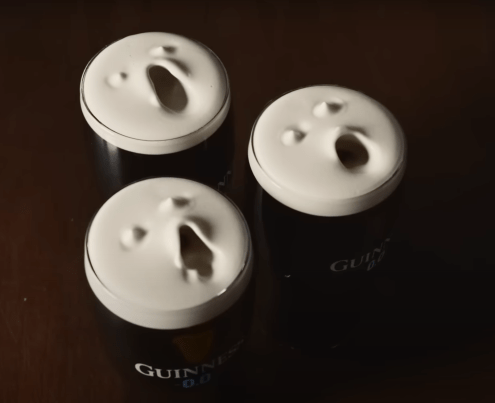
There I was, minding my own business and watching a men’s tennis match from Tokyo on the Tennis Channel, when up popped a commercial featuring a bunch of singing pints of Guinness that looked like this.

What the heck, Doc – I thought multiple pints of beer made the drinker sing, not the other way around. 

– Draught King

Dear DK,

The Doc has enjoyed – responsibly! – more than a few pints of Guinness in his time, some of them in the Emerald Isle itself, so you’ve come to the right place with your question.

The Singing Heads spot debuted a few weeks before St. Patrick’s Day last March. Alan McAleenan, brand director of Guinness Ireland, told The Drum’s Amy Houston, “We are delighted to be championing our non-alcohol beer, Guinness 0.0, in our largest-ever responsible drinking campaign in Ireland and encourage everyone to engage in an enjoyable and responsible way to make it a St Patrick’s Day to remember.”

The spot, which features Welch singer Bonnie Tyler’s ’80s hit Holding Out For a Hero, is certainly memorable.

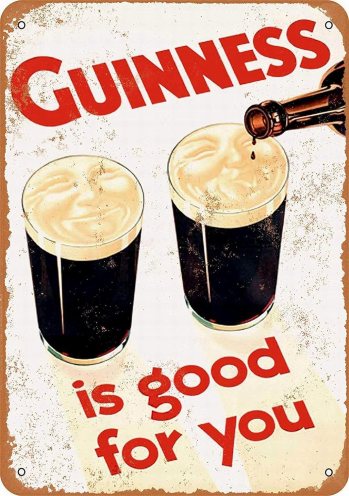
Of course, Guinness has a proud tradition of Putting the Face on a Pint.

So – is the Guinness spot the best beer commercial of 2023? You be the judge.

Meanwhile, sláinte is táinte!