Is Apple’s New ‘Crush” Advertisement As Soul-Crushing as Critics Allege?

Well the Doc opened up the old mailbag today and here’s what poured out.

Dear Dr. Ads,

There I was, minding my own business and reading Oliver Darcy’s CNN Reliable Sources newsletter, when I came across this item about a new ad for Apple’s latest iPad.

What do you think of Apple’s new “Crush!” advertisement? Julian Sancton writes that the “dystopian spot, which depicts the relentless destruction of instruments and artworks, marks a dark turn for the company, and begs the question: Will 2024 be like 1984?” (THR)

The spot has generated blowback, with actor Hugh Grant saying it represents “the destruction of the human experience.” (Deadline)

Whaddaya think, Doc? They sound kind of Appleplectic to me.

– Candid Crush

Dear CC,

Right now, Apple has a core problem: It revenue “declined for the fifth time in the past six quarters.” according to Aaron Tilley’s piece in the Wall Street Journal, with iPhone sales down 10.5% from last year in the most recent quarter.

So . . . the new iPad Pro to the rescue! Here’s how The Hollywood Reporter’s Julian Sancton describes Apple’s new TV spot, which is set to the Sonny & Cher oldie “All I Ever Need Is You.”

It seems at first like a brilliant, if unsubtle, piece of dystopian satire: countless symbols of human creativity — books, musical instruments, artworks, arcade games — crowded onto a platform and slowly, painfully, sadistically pancaked between the massive metal jaws of a machine. An upright piano splinters and cracks. Paint gushes like blood.

Sort of the flip side to Ridley Scott’s 1984 spot for Apple, this one “[reflecting] a widespread anxiety about the global advance of fascism and the inexorable rise of artificial intelligence: ‘2024 will be like 1984.'”

Uhh . . . no.

Deadline’s Dominic Patten points out that it’s not just Hugh Grant who’s pearl-clutching over the Apple ad. “Among those taking the tech giant, who is facing a Department of Justice suit over an alleged illegal monopoly over the smartphone market, to task for its sheer insensitivity and misstep are Hugh Grant and Justine Bateman.”

Also weighing in with critiques:  Creed II scribe and Luke Cage creator Cheo Hodari Coker; Emmy-winning and Directors Guild Award winning Handmaid’s Tale director Reed Morano; and Bill & Ted franchise and Men in Black screenwriter Ed Solomon – a regular Murderers’ Row of Tinseltown glitterati.

The Doc is laying plenty of eight-to-five that each of them will own a new iPad Pro before the month is out.

Don’t be crushed. That’s just show biz.

Which Consumer Brand Should I Choose For My Next Tattoo?

Well the Doc opened up the old mailbag today and here’s what poured out.
Dear Dr. Ads,

There I was, minding my own business and reading the skeletal remains of Newsweek when I came across this piece by Tatiania Perry, headlined “Harley-Davidson, Volkswagen Make Top Ten of World’s Most Popular Brand Tattoos.”

Coupon and discount site, DealA looked at more than 50 of the world’s most popular brands to reveal which company inspired the most tattooed fans. The categories for the brands were media, gaming, automotive, food and drink, toys and fashion.

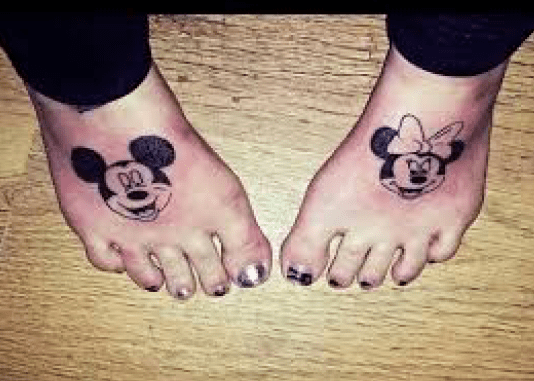
Disney was the leader with 474,458 hashtags. The tattoos for the company have a heavy nostalgia lean because of the franchise’s history. The tattoos under the hashtag ranged from Mickey Mouse to the variety of princesses.

In second place, with significantly less hashtags, was Nintendo at 42,648. The Japanese video game company’s hashtag was filled with “Mario Kart,” “The Legend of Zelda” and “Super Smash Bros.” characters and references.

Arriving in third is Harley-Davidson, which is not surprising given the loyalty of its customers. The motorcycle company’s logo has been plastered on a background of skulls, eagles, flames and flags.

So, Doc – what’s your prescription for my next piece of body art?

– Tattoo Me

Dear Tattoo Me,

For starters, here’s the full top five, via Attractions Magazine.

Obviously, this is a real thing, as you can see all over the Googletron.

Brand-based tattoos can be a goldmine for marketers, according to this post last year on The Cult Branding Company’s website.

There are many psychological reasons customers brand themselves with tattoos of the companies they love. Here are three:

  1. Membership into Social Groups: Brand tattoos help customers bond with others in the same social group who share special interests and common values. Brand tattoos send a message that they belong to a unique, personally meaningful community. You only “get the message” if you’re part of that group.
  2. Finding Meaningful Associations: Brand tattoos remind customers of personal values. The tattoo is a permanent badge with special meaning. It creates a powerful recall cue of the memories, experiences, emotions, and other positive associations they have with the brand. A single image, as represented by the tattoo, can encapsulate a series of complex memories and feelings.
  3. Connecting with Ideals: Brand tattoos are reminders of the customer’s ideal life. The brand becomes associated with specific ideals, as Apple has become inextricably linked to creativity, beauty, and self-expression. Customers see the brand’s mark as a reminder of these ideals, and they draw strength from the image.

Customers instinctively look for meaning; they naturally look for something to rally around; they crave an emotional payout from their interaction with the brands they love.

So, Tattoo Me, there’s the à la carte menu for your next piece of body art. But be careful which brand you rally around for an emotional payout. Abbey White’s piece in The Hollywood Reporter the other day provides a timely cautionary tale.

Inside Disney’s Chaotic “Don’t Say Gay” Bill Response

In the days leading up to CEO Bob Chapek’s apology, Disney’s LGBTQ employees didn’t hold back in their criticism of the company’s public silence on Florida’s “Don’t Say Gay” bill and were already gearing up for an increasingly fraught and “exhausting fight.”

In interviews with The Hollywood Reporter, and in letters to Disney leadership, LGBTQ staffers across the company denounced Chapek’s defense of Disney’s initial decision to not release a public statement regarding the passage of HB 1557/SB 1834.

“All corporations are involved in things like this,” Molly Ostertag, a Disney TV Animation writer who worked on its groundbreaking animated series The Owl House, told The Hollywood Reporter prior to Chapek’s apology Friday. “I think people are responding to the hypocrisy of Disney. They’re established as being a place safe for children, inspiring for children and accepting of children. This goes against all of that.”

The Doc’s diagnosis: Mickey and Minnie might be cute, but in the end they’re cismice.

Forewarned is forearmed.