Can the Trump Administration Finally Drag Drug Ads Into FDA Compliance?

Well the Doc opened up the old mailbag today and here’s what poured out.

Dear Dr. Ads,

There I was, minding my own business and clicking through the Boston Globe, when I came across Gerry Smith’s Bloomberg piece about a pharmaceutical company that actually did what the Food and Drug Administration said to do about its TV spots.
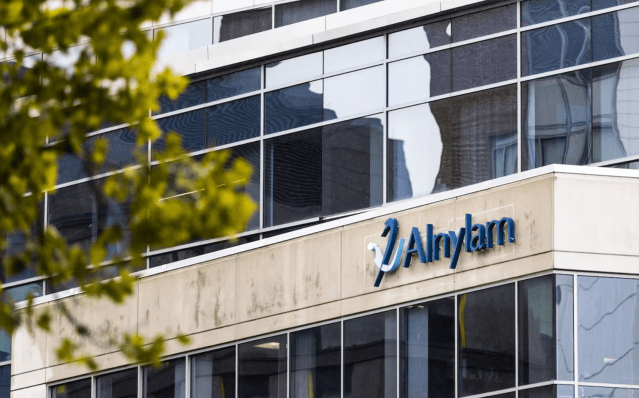
Alnylam Pharmaceuticals Inc. has stopped airing a TV commercial for its new heart medicine, a sign that the Trump administration’s crackdown on the industry’s ubiquitous drug ads is having an impact on the media landscape.

Alnylam was one of many companies to get letters last month from the US Food and Drug Administration calling out what the agency believes are misleading commercials. Most of the letters, sent to companies including AstraZeneca Plc, Bristol Myers Squibb Co., and AbbVie Inc., detail concerns with their online, broadcast, and print marketing, ranging from hiring actors who appear too healthy to omitting key safety risks.

Whaddaya think, Doc – is the Food and Drug Sadministration finally breaking through after years of being told by drugmakers to screw off?

– Medicine Man

Dear MM,

As TV reporters often say (when they have nothing to say), time will tell. Meanwhile, the Alnylam commercial in question – for the new heart medication Amvuttra – is nowhere to be found on Google or YouTube. According to the Bloomberg piece, however, the spot showed patients who were way too exuberant while “traveling and participating in activities like whale-watching and jumping up and down while cheering at a football game.”

The ad was misleading, the FDA said, because it suggested that patients “can be carefree” about the heart disease that the drug treats.

“The totality of these claims and presentations also misleadingly suggests that treatment with Amvuttra will broadly improve a patient’s overall quality of life when this has not been demonstrated,” wrote George Tidmarsh, the head of the FDA’s Center for Drug Evaluation and Research, on Sept. 9. The company was asked to address the violations, including by halting communications the FDA found misleading.

In response, Alnylam pulled the ad, saying “It’s standard practice to pause advertising while changes are being considered.”

(Actually, it’s kind of not, as the Doc recently chronicled regarding the FDA’s attempted crackdown on “surreal” ads. )

The Alnylam pullback means the FDA is batting .010 so far out of its 100 cease-and-desist letters to pharmaceutical companies.

The Doc’s diagnosis:  Please note that Alnylam has a market cap of around $60 billion compared to, say, Pfizer’s $155 billion. Or AstraZeneca’s $255 billion. Or AbbVie’s $413 billion. So the FDA basically hooked one of the minnows in the Pharma pond. Wake us when they land a big fish, yeah?

Can RFK Jr. Really Make Pharmaceutical Commercials Too Costly to Run?

Well the Doc opened up the old mailbag today and here’s what poured out.

Dear Dr. Ads,

There I was, minding my own business and reading Brian Stelter’s Reliable Sources newsletter, when I came across this item about the latest incarnation of Health and Human Services head Robert F. Kennedy Jr.’s jihad against Big Pharma.

Robert F. Kennedy Jr.‘s HHS is weighing a pair of policies cracking down on direct-to-consumer drug ads by making them more costly to produce. The rules could potentially “leave broadcasters in financial straits,” as they would choke off a crucial revenue source, CNN’s Liam Reilly and Tami Luhby report. Full story here…

What the hey, Doc – will RFK Jr. stop at nothing to land his white whale?

– Bitter Pill

Dear BP,

As you might have noticed, the Doc has been on Bobby Brainworm (pat. pending) like Brown on Williamson for months now over his Just Say No to Drug Ads campaign. Here’s the latest brainstorm from RFK Irregular, as detailed by CNN’s Liam Reilly and Tami Luhby.

While not an outright ban, the two policies would make it significantly more difficult and expensive for drug companies to push their products across broadcasters’ airwaves, according to a Bloomberg report on Tuesday. The policies look to either mandate that advertisers elaborate on the risks posed by their drugs — forcing ads to be longer and, therefore, more expensive — or bar drugmakers from writing off direct-to-consumer ads as business expenses on their taxes, also padding the bill, Bloomberg reported.

We’re talking real money here, folks: “Companies spent $10.8 billion in 2024 on direct-to-consumer pharmaceutical advertising in total, according to a report from the advertising data firm MediaRadar,” says Rachel Cohrs Zhang in her Bloomberg piece.

A whopping 59% of that money goes to TV spots. Case in point: “AbbVie alone spent $2 billion on direct-to-consumer drug ads last year, primarily on advertising for the company’s anti-inflammatory drugs Skyrizi and Rinvoq.”

Representative sample . . .

Annoying? Perhaps. Lucrative? Definitely. “The medicines brought in more than $5 billion for AbbVie in the first quarter of 2025.” That’s $5 billion in three months (annualized return on investment: 1000%) for those of you keeping score at home.

Meanwhile, “Senators Bernie Sanders and Angus King [have] introduced a bill to ban all prescription drug advertising,” according to Chris Williams at Fox News, thereby taking on both the pharmaceutical and broadcast industries.

Wake me when people start saying, “Doctor, I don’t see spots before my eyes.”

What’s Opera, Doc – Product Placements At London’s Royal Opera House?

Well the Doc opened up the old mailbag today and here’s what poured out.

Dear Dr. Ads,

There I was, minding my own business and clicking through email (which is like fingernails, right? – never stops growing), when up popped this message in my in-box.

Hi,

Thought you might be interested in Operas and Ballets considering product placement.

Paging Dr. Ads!

Really, Doc? The Barbasol of Seville? Cosi Fan Tutti Frutti? Porgy & Bess Eaton Donuts?

Even Looney Tunes wasn’t that crazy.

– Bugs-eyed

Dear Buggsy,

Let’s start with the all-time classic of the horned helmet set (tip o’ the hare to Looney & Cartoon fan 004).

London’s Royal Opera House, which can only dream of reaching such operatic heights, is now flirting with a new low note, as Michael Vincent reports at Ludwig Van Daily.

In the heart of London, the Royal Opera House (ROH) stands as a testament to the grandeur of the performing arts. Yet, as it faces increasing competition, the venerable institution may need to embrace the digital age’s dynamism to ensure its future.

According to Bloomberg, Lloyd Dorfman, the chairman of the board of trustees at the ROH, is spearheading a pioneering approach to bridge the gap between classic artistry and modern-day technology.

That “pioneering” approach? Jumping into the $29 billion worldwide product placement pool.

High-end fashion houses like Burberry have experience in the performing arts, creating bespoke ballet costumes for special performances. The idea is to expand these collaborations by integrating luxury brands into the fabric of the ROH’s daily operations seamlessly. An Example includes having Rolex sponsor the precise timing of ballet performances, elevating the brand’s association with precision and excellence while infusing the ROH with much-needed funds.

Granted, product placement has previously been more associated with soap operas than their highbrow namesakes. But ROH chair Dorfman told Bloomberg’s Sabah Meddings,“Harrods has got scaffolding on the front of their building, and every month they have a different brand.” The Royal Ballet or Opera, he believes, “could also be sponsored by brands such as Tiffany & Co or Rolex, should they be interested.”

So, to recap: We’re looking at product placements during ROH performances, product placements on ROH’s landmark Covent Garden home – what’s next?  Branded baritones? Logoed Lohengrins? HBO mezzo sopranos?

Your operatic death scene goes here.