Here’s Why Fr. Roy Bourgeois Ran That Boston Globe Ad

DrAdsforProfileSo the Doc asked the other day, Who Is Fr. Roy Bourgeois and Why Did He Run an Ad in the Boston Globe?

The ad (in part):

Screen Shot 2014-03-06 at 12.36.25 AM


And etc. (including a call for people to contact Pope Francis to “request that our Catholic Church ordain women, accept LGBT (lesbian, gay, bisexual, and transgender) people as equals, and recognize gay marriage”).

As for our question, we answered the who in our original post.

And we can now answer the why, having just talked to Fr. Bourgeois on the phone. (Tip o’ the pixel to his editor, Margaret Knapke, who made the phone call happen.)

Why the Boston Globe?

“I just wanted to poke the beehive,” Fr. Bourgeois told the Doc, “and I have some friends there who wanted to contribute to a good cause.”

He has friends here because he attended seminary in Hingham and has given talks in this area numerous times.

The response has been good, Fr. Bourgeois says, and he has no intention of recanting his support for women’s ordination, even though it could return him to the priesthood.

“Asking me to do that would violate my conscience,” he says.

Fr. Bourgeois has himself contacted Pope Francis, but has yet to receive a reply. Meanwhile, he says, it’s “just a matter of time” until women (and other disenfranchised groups) are justified by the Catholic Church.

God bless him.

Yo.


Who Is Fr. Roy Bourgeois and Why Did He Run an Ad in the Boston Globe?

DrAdsforProfileWell the Doc opened up the old mailbag today and here’s what poured out.

Dear Dr. Ads,

So I’m minding my own business reading the Boston Sunday Globe when I come across this ad on page A6. (Blurry visuals compliments of the Globe.)


Screen Shot 2014-03-04 at 1.51.07 AM

Screen Shot 2014-03-04 at 1.47.34 AM


Really? Some Catholic priest in Columbus, GA has enough dough to buy a quarter-page ad in the Sunday (week’s most expensive) Globe? What’s the deal here, Doc?

– Cathaholic

Dear Cathaholic,

Excellent question.

First, some background.

From November, 2012 via Tom Roberts of the National Catholic Reporter:

Roy Bourgeois: They finally got him

Ah, they finally got him, as we all knew they probably would. Eventually. And with a press release it was done: Fr. Roy Bourgeois, a Maryknoll priest for 45 years, was told that the Vatican “dispenses” him “from his sacred bonds.”

And the Maryknoll Fathers and Brothers, caught in the culture that finds advocating for women’s ordination such a grievous and unpardonable offense, “warmly thanks” Roy “for his service to mission and all members wish him well in his personal life.”

And so it goes, as Vonnegut would say. So it goes.

Bourgeois’ case is a prime illustration of what, today, the institution can and can’t tolerate. Bourgeois’ major offense, the sin that is unforgiveable in the eyes of the church, for which penalty is removal from the order which he has served for nearly half a century and dismissal from the community, was advocating for women’s ordination.

And from a year ago, here’s the padre himself in a New York Times op-ed:

My Prayer: Let Women Be Priests

AFTER serving as a Roman Catholic priest for 40 years, I was expelled from the priesthood last November because of my public support for the ordination of women.

Catholic priests say that the call to be a priest comes from God. As a young priest, I began to ask myself and my fellow priests: “Who are we, as men, to say that our call from God is authentic, but God’s call to women is not?” Isn’t our all-powerful God, who created the cosmos, capable of empowering a woman to be a priest?

Let’s face it. The problem is not with God, but with an all-male clerical culture that views women as lesser than men. Though I am not optimistic, I pray that the newly elected Pope Francis will rethink this antiquated and unholy doctrine.

He’s also decided to pay, in the form of the Globe ad.

Why here? Why now?

The old Doc will try to find out. We didn’t find a way to contact him at his website, but we’ll track him down eventually and get back to you.

Yo.


What the-? National Enquirer Runs Full-Page Ad in New York Times!

DrAdsforProfileWell the Doc opened up the old mailbag today and here’s what poured out.

Dear Dr. Ads,

There I was, minding my own business and reading Wednesday’s New York Times, when I came across this.


Screen Shot 2014-02-26 at 11.36.49 PM


So, wait a second: The National Enquirer has set up a foundation because they got a story wrong? Don’t they get all their stories wrong?

Whiskey tango foxtrot, yeah Doc?

– Elvis

Dear Elvis,

Hard to believe, isn’t it?

First off, let’s highlight the text for the tiny-type impaired.


Screen Shot 2014-02-26 at 11.37.40 PM

Screen Shot 2014-02-26 at 11.38.04 PM

Screen Shot 2014-02-26 at 11.38.27 PM


Now the back story, compliments of Reuters media critic Jack Shafer.

Supermarket tabloid gets hoodwinked by imposter!!!

The National Enquirer got its nosey-parker proboscis bloodied this month after its big Philip Seymour Hoffman “scoop” was enquirer13-260x300promptly revealed to be a hoax.

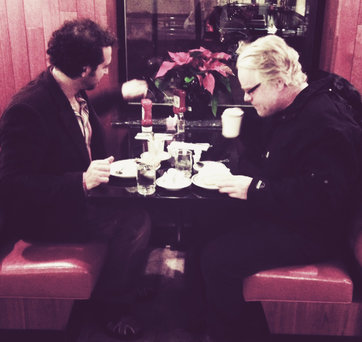
Only three days after Hoffman died, the tabloid reported that playwright David Bar Katz — the friend who discovered Hoffman’s dead body — and Hoffman were lovers. It also alleged that Katz watched Hoffman freebase cocaine the evening before his death and had repeatedly witnessed his friend’s use of heroin.

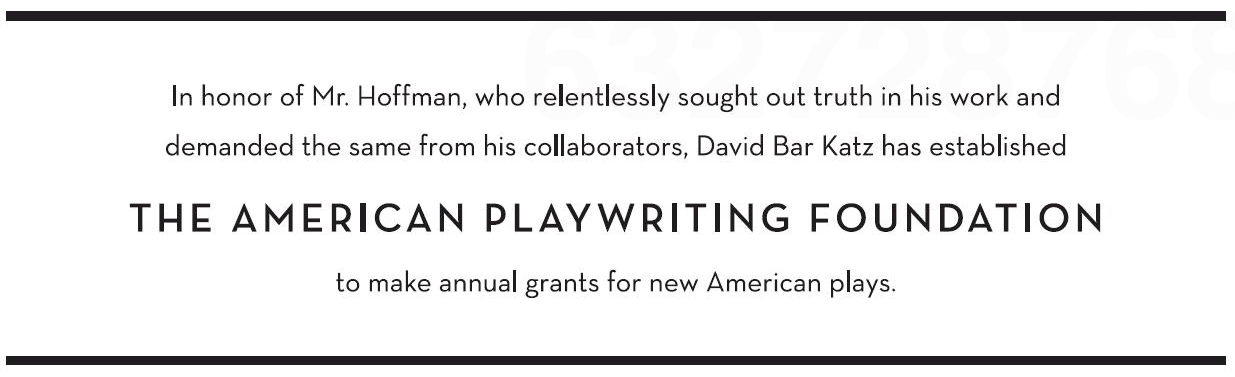
The source for the Enquirer‘s piece? Katz himself, according to the tabloid. But when Katz immediately stepped forward, denied any such interview took place, denied being Hoffman’s lover, denied having watched him do cocaine or heroin, and sued the Enquirer for $50 million, the newspaper retracted the story and apologized. It has now settled with Katz and will fund a foundation that will make annual grants of $45,000 to unproduced playwrights to honor Hoffman. The Enquirer also took out a full-page ad in today’s New York Times to state that it had been fooled by an imposter who “falsely and convincingly claimed to be Mr. Katz.”

But that’s not all.

The Times not only ran the ad on Wednesday, it also ran this front-page piece:

Truth and a Prize Emerge From Lies About Hoffman

Herding his three younger sons out the door to school on Feb. 5, David Bar Katz was stopped for a moment by his eldest, who was browsing the Internet.26about-alt-tmagSF-v2

“My 14-year-old said, ‘Dad, there’s something online about you and Phil being lovers,’ ” Mr. Katz said. “I said, ‘Phil would get a kick out of that.’ ”

Phil was Philip Seymour Hoffman, the actor and Mr. Katz’s good friend, who had been found dead three days earlier, apparently from an overdose of heroin. Mr. Katz, a playwright, was one of two people who had gone to his apartment and discovered his body.

“Things had already achieved the maximum level of surreality, and I thought this thing online was a big nothing,” Mr. Katz said.

In fact, the article, published by The National Enquirer, was the first pebble of a landslide of malignant fiction that sprawled across the web.

And came to rest in a full-page Times ad.

Yo.


If Barbie Is So #Unapologetic, What’s with the NYT Ad?

DrAdsforProfileWell the Doc opened up the old mailbag today and here’s what poured out.

Dear Dr. Ads,

I’m a big fan of the annual Sports Illustrated Swimsuit Edition (hey – I read it for the articles), so imagine my surprise when Barbie® turned up as one of the Barbies featured in this year’s model.

Then I saw this full-page ad in the New York Times.


Screen Shot 2014-02-19 at 1.17.37 AM


What is this, Doc – some sorta Hall of Vanity Mirrors?

– Ken

Dear Ken,

That doesn’t capture the half of it.

This put-another-swimsuit-on-the-Barbie campaign is a masterstroke of marketing, generating media coverage from Trenton to Taipei.

Representative sample (via Yahoo! Shine):

Barbie Graces Cover of “Sports Illustrated,” Mom Wants Apology

In what can only be described as a bizarre marketing move, a bikini-clad Barbie is being featured on the wrap cover of the 2014 Sports Illustrated Swimsuit Edition, debuting this week. That’s right, unrealistic curves and all. For 50 years, the sports 470_2759313magazine has dedicated one cover a year to scantily clad ladies like Kate Upton and Brooklyn Decker, and for their 50th anniversary, they are paying tribute to a doll.

Really? Barbie on the wrap cover of what has become the “sexiest” magazine cover of the year? The unveiling of which is surrounded by as much pomp and circumstance as People’s“Sexiest Man of the Year” or Time’s “Person of the Year?” This is not only sexualizing a child’s doll, but making the ultimate unattainable body (that’s not even human) the epitome of female perfection. (Yes, I know it is the promotional wrap and not the actual cover but STILL!)


Seriously – angry Moms are gold to any marketer chasing the 18-49 demo, the population most coveted by advertisers.

Meanwhile, here’s what #Unapologetic gets you.


Screen Shot 2014-02-19 at 1.49.46 AM


And etc.

Yo.


Ain’t This Georgia Lawyer’s Super Bowl Ad a Peach?

DrAdsforProfileWell the Doc opened up the old mailbag today and here’s what poured out.

Dear Dr. Ads,

I was just sittin’ there watchin’ the Super Bowl when this beauty popped on-screen.


Whiskey tango foxtrot, yeah Doc?

– Hoot ‘Lanta

Dear Hoot,

Fact #1: The annual Super Bowl broadcast traditionally includes some local commercials among the big-bucks TV spots.

Fact #2: We’ve never seen anything like this one.

From FishbowlNY:

The only thing that could possibly raise the ante of this incredible two-minute Savannah, GA area TV spot is if Matthew McConaughey had done the voiceover honors. Who knows, given the life story of the guy responsible for the ad, we may all be watching said indie flick or HBO movie a few years from now.

Per Deadspin’s Tom Ley, personal injury lawyer Jamie Casino did to the conventions of that professionl realm’s TV advertising over the weekend what the Seahawks hoisted from the opening snap on the Broncos . . .

Check out #CasinosLaw for further details.

Yo.

What’s This ‘Addressable Advertising’ Rumpus About?

DrAdsforProfileWell the Doc opened up the old mailbag today and here’s what poured out.

Dear Dr. Ads,

A case of suds is riding on this.Unknown-1

I saw the following item in Politico’s Playbook the other day:

“DIRECTV and DISH Revolutionize Political TV Advertising Landscape with Combined Addressable Advertising Platform Reaching 20+ Million Households” – Release: “DIRECTV and DISH Network … have joined forces to offer an addressable advertising platform of unprecedented scale and reach for political campaigns. The strategic relationship will allow participating statewide political campaigns to target their TV ads at the household level within 20+ million DIRECTV and DISH homes.” 

My buddy says addressable advertising means they’ll send a letter to your house.

I say it means they’ll send a letter to your work.

Who’s right, Doc?

– Direct Dish

Dear Direct Dish,

You’re both idiots.

Addressable advertising involves TV spots that are specifically targeted to individual households.

For example, downstairs from the Doc there’s a nice couple with two kids. When they watch television, they’ll see commercials for DisneyWorld and Flintstones vitamins and Carnival Cruises. When the old Doc watches TV upstairs, he’ll see ads for Marian Manor and Centrum Silver and Forest Hills Cemetery.

That’s addressable advertising.Unknown

According to the press release from the satellite TV companies, “[t]he DIRECTV-DISH arrangement will focus on political TV advertisements only, while the companies’ other media sales efforts will continue to operate independently.”

But that’s just the beginning. Addressable advertising is the Holy Grail, every brand’s wet dream of “marketing to an audience of one,” as they call it.

And, in turn, addressable advertising is every audience-of-one’s nightmare.

Yo.


Got Any Love for Bud’s ‘Puppy Love’ Ad?

DrAdsforProfileWell the Doc opened up the old mailbag today and here’s what poured out.

(Actual letter – tip o’ the pixel to Double One in the great American Heartland.)

Dear Dr. Ads,Budweiser_Ad_2_012914

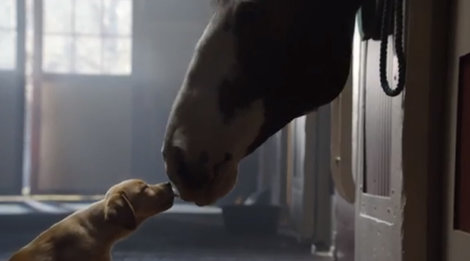
So what do you think of the Budweiser “Puppy Love” ad for the Super Bowl?  Let’s hear it straight from the Dr’s mouth—yea or neigh?

Remember …not every horse lover is an a–.

Regards,
The old gray mare

Dear Old Gray Mare,

First let’s look at the ad in question.


Now don’t get mad at the Doc but  . . . this one doesn’t quite cut it.

No question the Clydesdales spots have been highlights throughout the Super Bowl years.

Just not this year.

Yo.


How Pretentious Is This iPad Air Spot?

cropped-dradsforarticles7.jpgWell the Doc opened up the old mailbag today and here’s what poured out.

Dear Dr. Ads,

I was just sitting there on Sunday watching the New England Patriots get shredded by the Denver Broncos when this iPad Air spot popped up:


Seriously?

– iDon’tGetIt

Dear iDon’t,

You mean you never watched Dead Poets Society where John Keating (played by Robin Williams) says to his students:

We don’t read and write poetry because it’s cute. We read and write poetry because we are members of the human race. And the human race is filled with passion. And medicine, law, business, engineering, these are noble pursuits and necessary to sustain life. But poetry, beauty, romance, love, these are what we stay alive for. To quote from Whitman, “O me! O life!… of the questions of these recurring; of the endless trains of the faithless… of cities filled with the foolish; what good amid these, O me, O life?” Answer. That you are here – that life exists, and identity; that the powerful play goes on and you may contribute a verse. That the powerful play *goes on* and you may contribute a verse. What will your verse be?

So you never saw this (tip o’ the pixel to ZDNet)?


You need to brush up on your Whitman, man. Or maybe just your Williams.

Yo.


What’s Up with the Adholes at Sports Illustrated?

DrAdsforProfileWell the Doc opened up the old mailbag today and here’s what poured out.

Dear Dr. Ads,

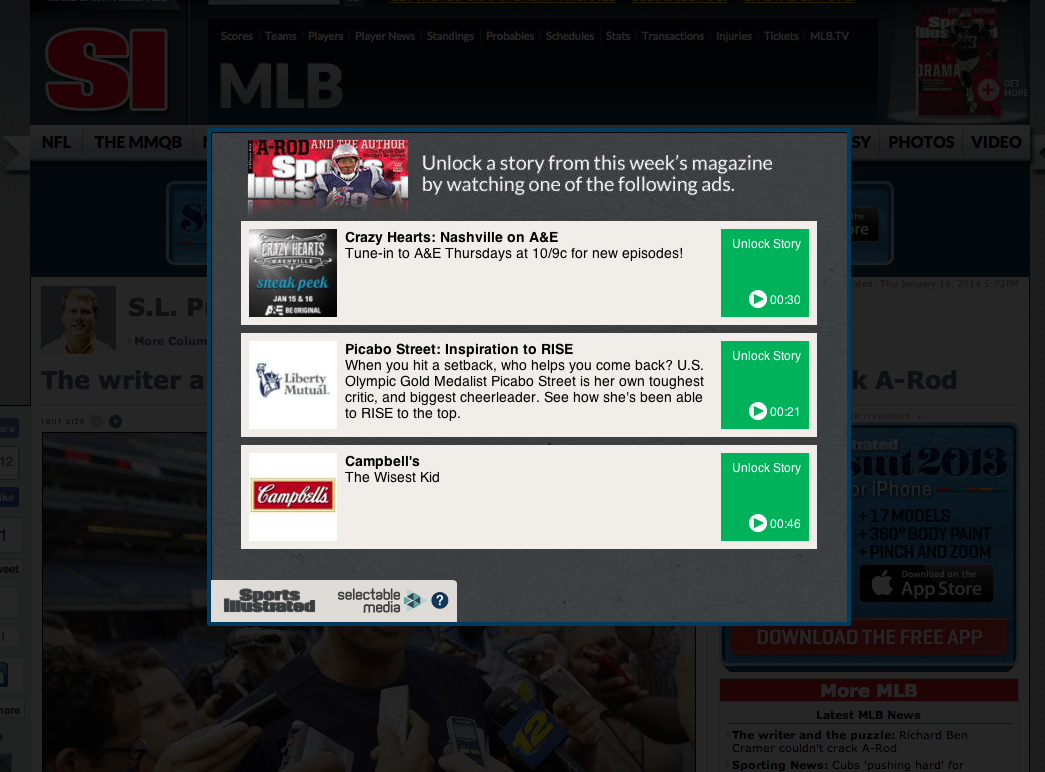
I was cruising around the Net and happened upon this Sports Illustrated piece – The writer and the puzzle: Richard Ben Cramer couldn’t crack A-Rod – at Longform. But when I clicked on the link, I got this:


Screen Shot 2014-01-17 at 2.06.53 PM


So I had to watch one of those spots before I could read the piece. But I didn’t.

Whaddaya think of that, Doc?

– Ad Nauseum

Dear Ad Nauseum,

I think it means I had to watch one of the spots instead. So I did. I watched the Picabo Street ad.


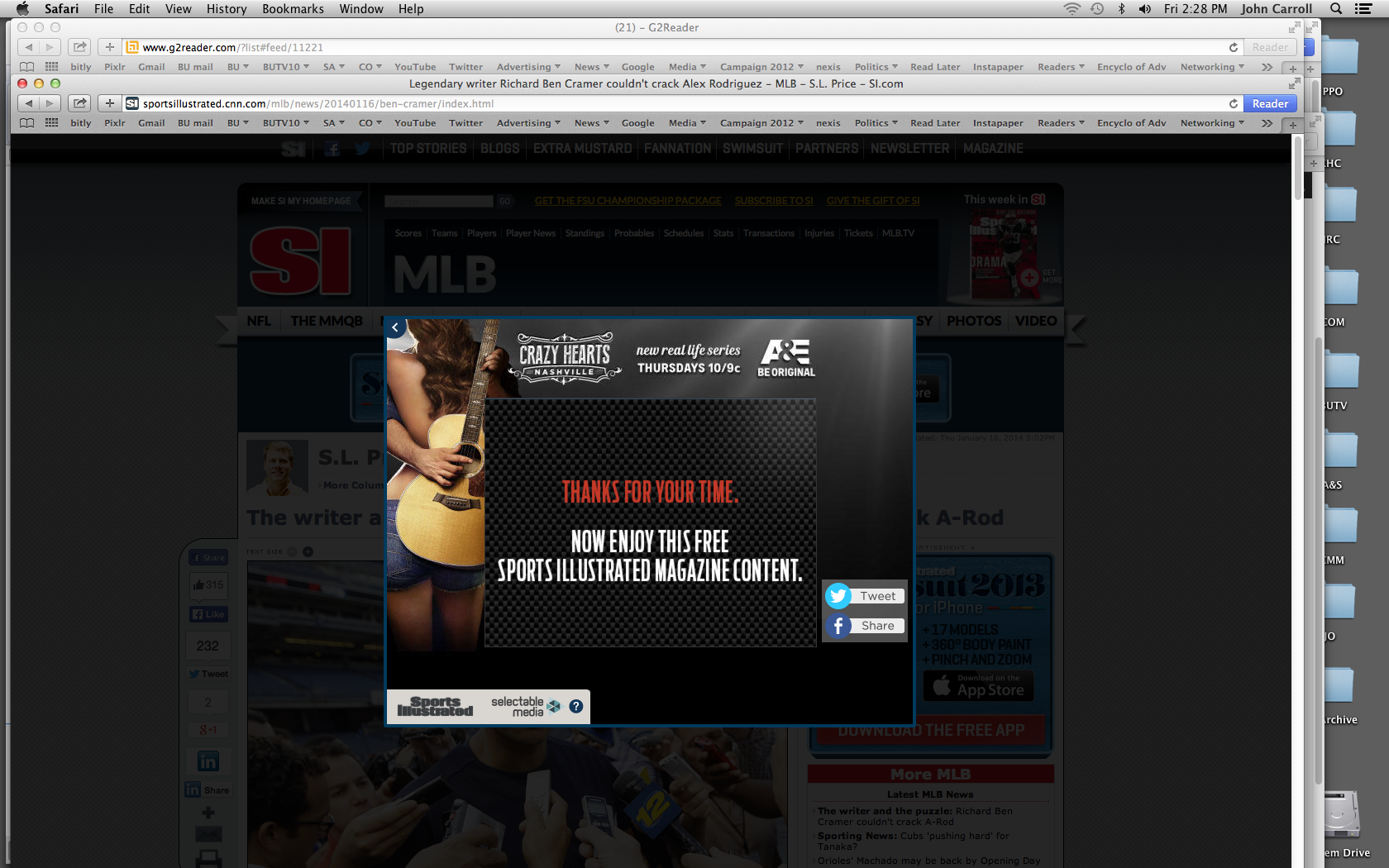
Which got me to this screen:


Screen Shot 2014-01-17 at 2.07.36 PM


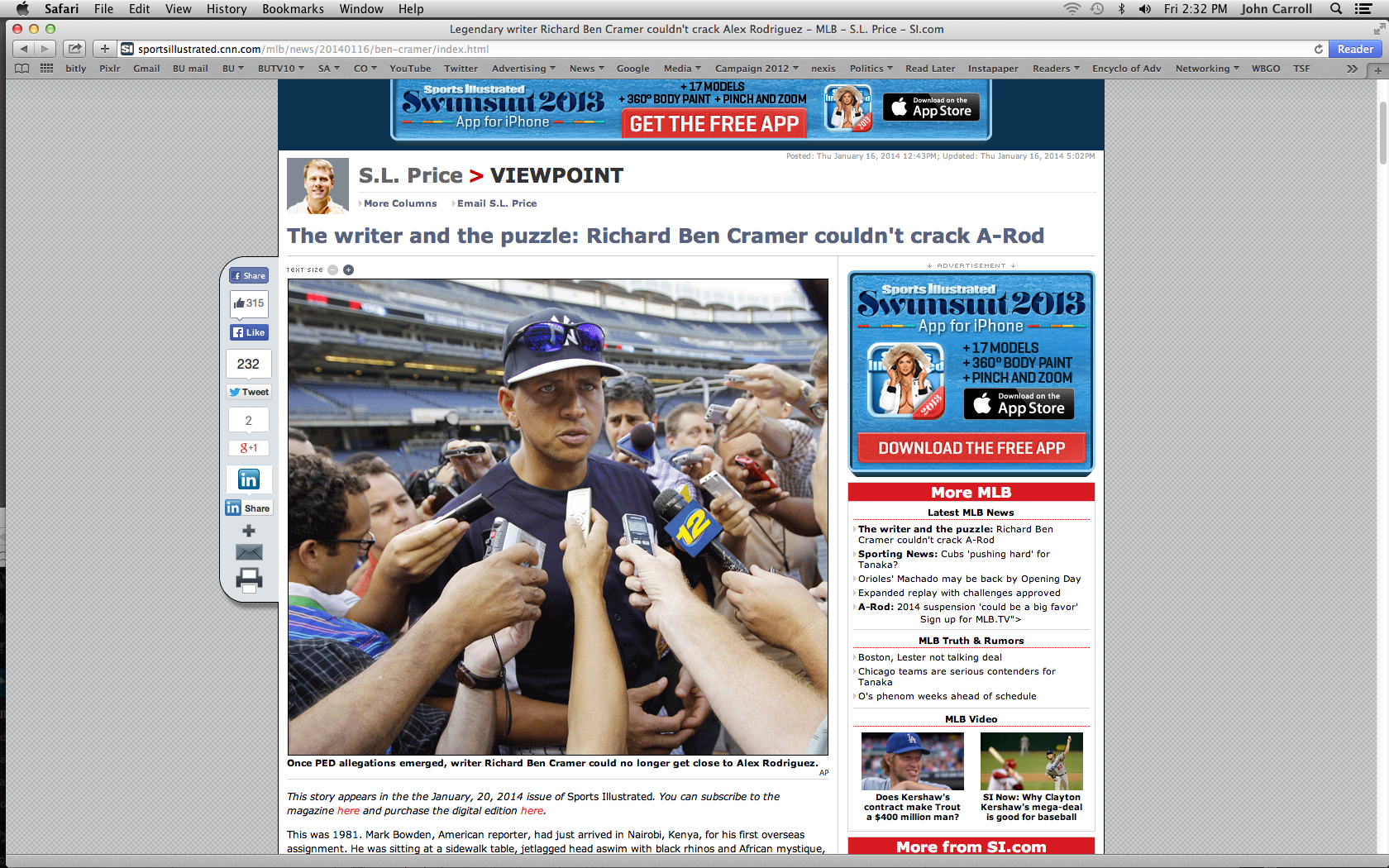
Which got me to this screen:


Screen Shot 2014-01-17 at 2.28.37 PM


Which got me to the SI piece.


Screen Shot 2014-01-17 at 2.32.08 PM


Which I could tell you about. But I won’t.

Whaddaya think of that?

Yo.

Who Really Wrote “You Don’t Have to Be Jewish to Love Levy’s”?

DrAdsforProfileWell the Doc opened up the old mailbag today and here’s what poured out.

Dear Dr. Ads,

One of the legendary figures in the 1960s creative revolution on Madison Avenue – Judy Protas – died last week. According to the New York Times obituary, she wrote one of the most famous taglines in advertising history.

You don’t have to be Jewish to write an ad for rye bread that has endured in public memory for more than half a century, but in Judy Protas’s case it certainly didn’t hurt.dog-protas-obit-master180

As Ms. Protas, a retired advertising executive at Doyle Dane Bernbach who died on Tuesday at 91, well knew, a campaign spent selling rye bread to Jews would be a campaign squandered in preaching to the converted.

“We had a local bread, real Jewish bread, that was sold widely in Brooklyn to Jewish people,” she told The New York Times in 1979. “What we wanted to do was enlarge its public acceptance. Since New York is so mixed ethnically, we decided to spread the good word that way.”

And thus, from Ms. Protas’s largely anonymous pen sprang a slogan — “You don’t have to be Jewish to love Levy’s Real Jewish Rye” — that has far outlived the actual campaign, which began in 1961 and ran through the 1970s.

Then the Times obit says “[the] evocative tagline is often credited to William Bernbach, a founder of DDB, or to Phyllis Robinson, the agency’s chief copywriter.”

So what gives, Doc?

Banjo

Dear Banjo,

For starters, one of those crediting the tagline to Phyllis Robinson was the Times itself, which said this in her obituary:

Ms. Robinson was paired with an art director, Bob Gage, and together they produced ads for marketers like Orbach’s department store, Polaroid ROBINSON-obit-articleInlineinstant cameras and Levy’s breads. For Levy’s Real Jewish Rye, there were colorful posters. Some showed a slice of rye disappearing, bite by bite. The headline: “New York is eating it up!”

Other posters showed New Yorkers of various ethnicities eating sandwiches. The headline, which entered the vernacular: “You don’t have to be Jewish to love Levy’s Real Jewish Rye.”

But in the Protas obit, the Times appears to settle the issue: “[P] eriod newspaper accounts and contemporary archival sources make clear that the actual writing fell to Ms. Protas, who, working quietly and out of the limelight, set down those dozen durable words.”

Sorted.

In addition, Ms. Protas wrote this classic ad for Ohrbach’s (as described by DDB Chairman Emeritus Keith Reinhard):

[T]he creative revolution Bernbach ignited did not start with the moving image. It started in print. “I found out about Joan,” was the headline for an ad for Ohrbach’s, a retail outlet that was Bill’s first client. To me, it is the single most important ad of all time.

Ohrbachs_Joan_sm.jpg

Why? Not just because it was the first time a retailer branded its customers instead of itself — it was suddenly chic to be cheap and this was at least fifty years before Target. It was the most important ad of all time not just because of the irresistible juxtaposition of arresting visual (a cat, with a hat and a long cigarette holder) and catty headline, not even because it was one of the first and best examples of Bernbach’s idea that every ad, like every person or product, should have a distinct personality, but because it was Bernbach’s work for Ohrbach’s that several years later attracted the U.S. importers of a pugnacious little car from Germany. Because DDB’s work for Ohrbach’s attracted Volkswagen, whose introduction of the Beetle is universally regarded as the opening volley of the creative revolution I suggest that “I Found Out about Joan” for Ohrbach’s is the ad that truly changed advertising history.

DDB changed advertising history by changing advertising’s tone of voice. As James B. Twitchell wrote in Twenty Ads That Shook the World:

Many of DDB’s clients were Jewish, and they made no attempt to disguise it. They came up from he street, not down from the hill, from NYU, not Princeton. In fact, they flaunted grit. Outré became classé,which was no mean trick in a world still riddled with anti-Semitism.

So for Orbach’s [sic], a Manhattan clothing outlet, they advertised “high fashion at low prices” with copy lifted from the catty patois of the Catskills . . .

And as a final salute to Judy Protas, there’s this from Margalit Fox’s excellent Times obit:

For Cracker Jack, Ms. Protas wrote the lyrics to the company’s long-ubiquitous TV jingle, which in full (“lip-smackin’, whip-crackin’, paddy-whackin’, knickin’-knackin’, silver-rackin’, scoundrel-whackin’, cracker-jackin’ Cracker Jack”) has the trochaic rush of a Gilbert and Sullivan patter song.

Yo.